
White County Multi-Day Arrest Reports
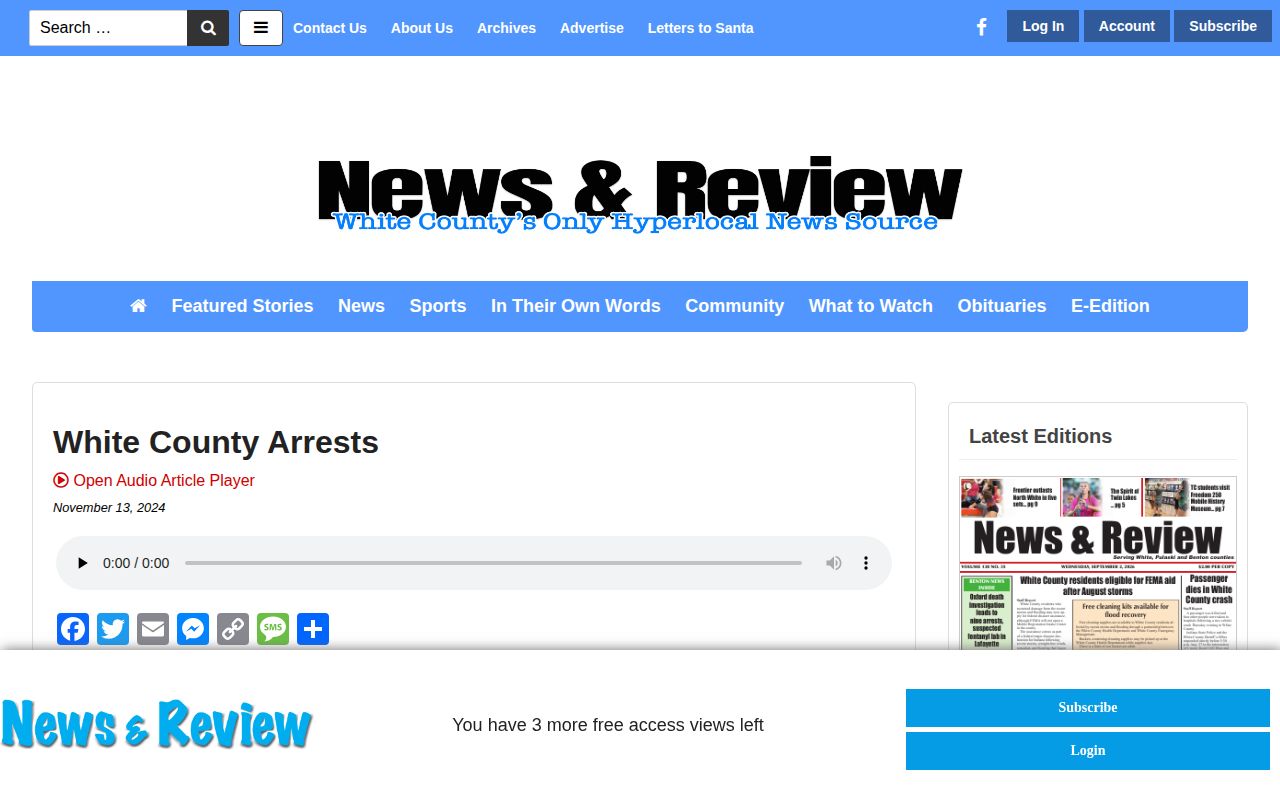
The White County Sheriff's Office posts no dated booking blotter. Nothing weekly. Nothing covering the last 72 hours. Its Inmate Search answers a narrower question: who sits in county custody right now. The clearest dated example comes from News & Review. It ran November 1 through 10, 2024. Each entry lists a date, name, age, city, and charge. There is no mugshot gallery, and the article never names its underlying record source. Treat it as selected, dated reporting. It cannot prove completeness or tell you who is still in jail.
White County Blotter Entry Fields
Every publisher shapes its White County blotter entries a bit differently. A newspaper might give richer date detail than the live jail roster. An unofficial booking page can add photos and descriptors, yet none of that extra detail makes a source official or current.
| Possible field | What was verified |
|---|---|
| Report or arrest date | Dates appear in the News & Review article |
| Name and age | Shown in the dated newspaper list |
| City | Included in the newspaper entries |
| Charges as reported | Listed, but still charges at this stage |
| Booking photograph | Not displayed in the reviewed newspaper article |
| Current custody | Must be checked with the sheriff roster |
| Final disposition | Must be checked through the court record |
Dates can mislead you. One publisher stamps an entry with the arrest date, another with booking, and a third with publication. Read each label carefully, and if the page never defines it, confirm the booking time with the sheriff instead of guessing from article order.
Read White County Arrest Blotters
Keep three stages separate when reading a White County arrest blotter. Publication, custody, and court outcome sit with different offices, and mixing them leads readers astray.
- Start with the article's stated date range and publisher.
- Record the name, date, city, and charge wording exactly as reported.
- Check the White County Sheriff roster for present county custody.
- Use Indiana MyCase for a public case filing and later disposition.
- Ask the sheriff for the underlying booking record when the web window has rolled off.
The sheriff's current roster carries no public archive range or fixed update time. A name missing there means several things. The person could have been released, transferred, or simply not listed on that page. For current-day intake rather than a dated article, turn to Arrests Last 24 Hours. Call the jail to confirm anything urgent.
White County Arrest News Pattern
White County arrest coverage comes from three different kinds of outlet. News & Review has printed a formal, dated arrest list. MonticLive runs police and legal stories as they break. Its coverage spans municipal arrests, task-force work, sex-offender arrests, and active-warrant reports. WRTV picks up selected regional public-safety events along with sheriff-attributed arrests. No outlet serves as a continuous official county feed. The News & Review White County arrests article is the best example of a bounded local blotter. It is presented as newspaper reporting rather than a sheriff database.
Stories appear across several dates. Treat them as a newspaper record, not a booking database. The MonticelloLive Police and Legal category shows this selective, story-based approach.
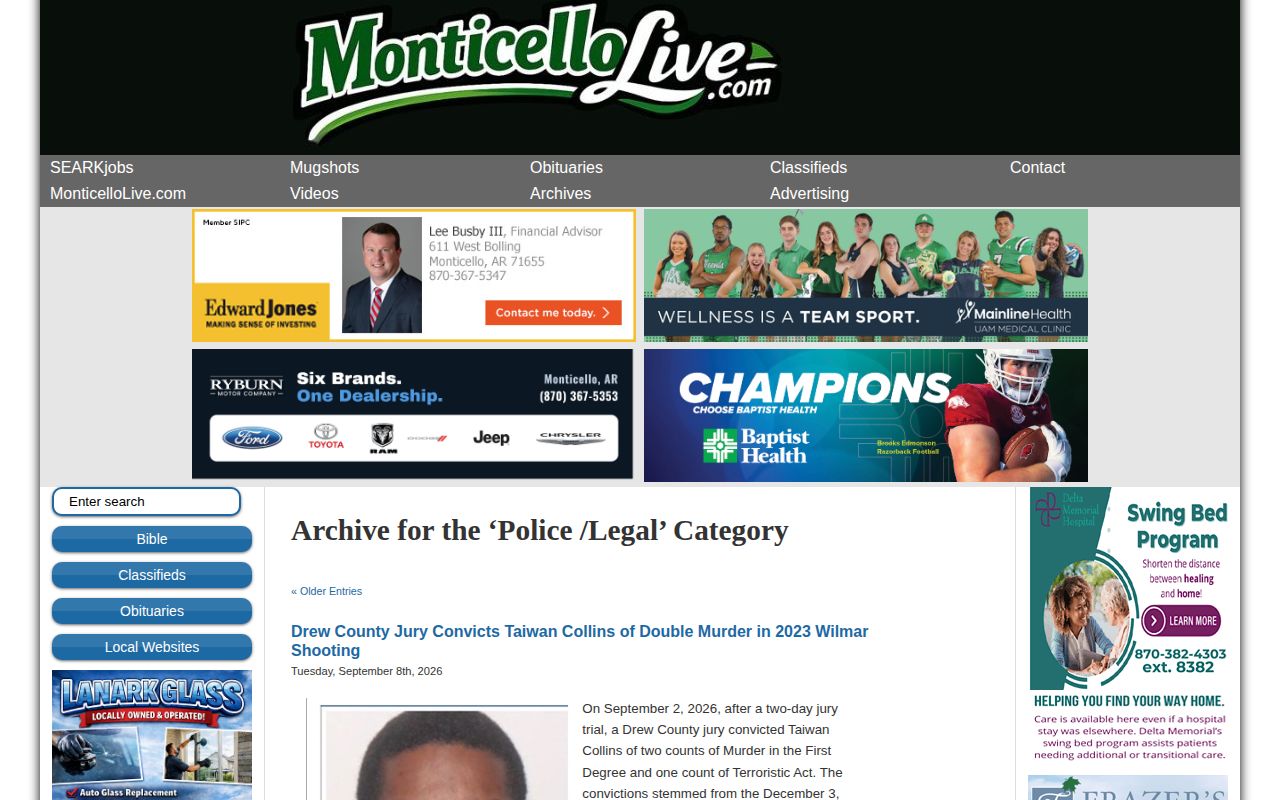
Those posts add local context, but their images are not official booking photos.
Unofficial White County Arrest Windows
When official sources and local news come up short, an unofficial rolling page can still offer a lead. RecentlyBooked's White County section displays a last-30-days window. Visitors see names, booking dates, details, photographs, and pagination. The page also posts its own update time. That timestamp belongs to the publisher alone. It says nothing about when the sheriff booked anyone or refreshed a county system, so treat the RecentlyBooked White County page as a secondary source only.
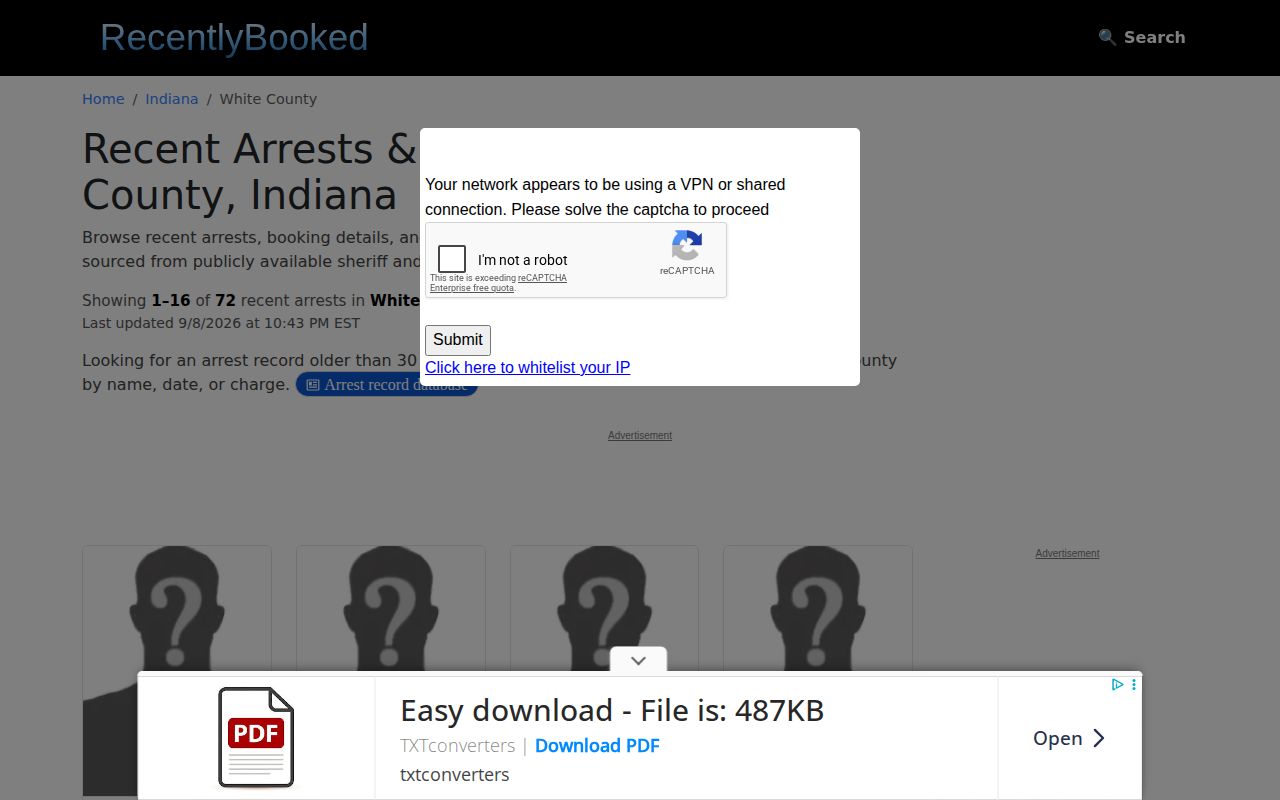
A few unofficial sites track White County arrests, but none of them carries official weight. Busted Newspaper runs a White County page with booking timestamps, charge text, descriptive details, and photographs. Treat it as a starting point only. Its listings can sit stale for long stretches. A missing entry means nothing on its own.
These aggregators do not establish the county's full arrest total, its weekend pattern, or how any case ended in court. One more caution applies. A booking may disappear from either site. That is not proof an official record was expunged. Confirm every result against the sheriff and the court before relying on it.
White County Weekend Reporting
The White County Sheriff's Office promises no continuous blotter and no next-business-day batch of arrests. News outlets run on their own clocks. So a single article can squeeze a holiday weekend or a backlog into one post. The reader never learns when each record first became available.
Dates deserve care here. Use the arrest or booking date when a source labels it clearly. Keep that date apart from the story's timestamp. The two rarely match. Where timing truly matters, request the maintained booking and intake times directly. The sheriff can also name the arresting agency. That helps when a Monticello, Monon, Brookston, state, or task-force event produced the record.
Note: A later news post may cover an earlier arrest, so never treat the post date as the booking date.
White County Arrest Archives
Once a web window closes, Indiana leaves no confirmed official home for old blotter items. A records schedule fills the gap. The state's Public Safety Agencies retention plan sets how long custody files survive. That adult inmate series covers intake, booking, transfer, release, arrest cards, court records, and related material. Destruction comes ten years after incarceration ends. Even so, ten years of retention is not a promise of public access online. Routine incident logs sit on a shorter five-year clock. Fingerprints stay permanent. The custody-file entry lists no separate category for booking photographs, so a request for an image should go straight to the sheriff. Ask which series holds it and whether the record remains on hand, was transferred, or was destroyed under an approved schedule. For an older White County arrest, use this sequence:
- Search MyCase by name and date for the public court continuation.
- Contact the White County Clerk when a public court document is not online.
- Send the sheriff a narrow APRA request for the booking record and image.
- Ask which retention series applies and whether a transfer occurred.
- Follow any transfer through IARA or the county records commission.
White County Charges and Outcomes
A charge line in the blotter is only the start of the story. Prosecutors and courts can amend, reduce, dismiss, divert, or try the case. That happens as the case moves along. Newspaper archives never update. They stay frozen while the court record keeps going. Indiana MyCase and the White County Clerk carry that public continuation. Sealed, expunged, and other restricted records stay off limits.
Want the full picture? The White County recent arrests hub shows how the official roster, booking-record requests, court dockets, and the state-prison locator fit together. An old article or third-party repost is never a complete current record.